
Wind, Solar, and Wonder: Bringing Clean Energy to the Classroom
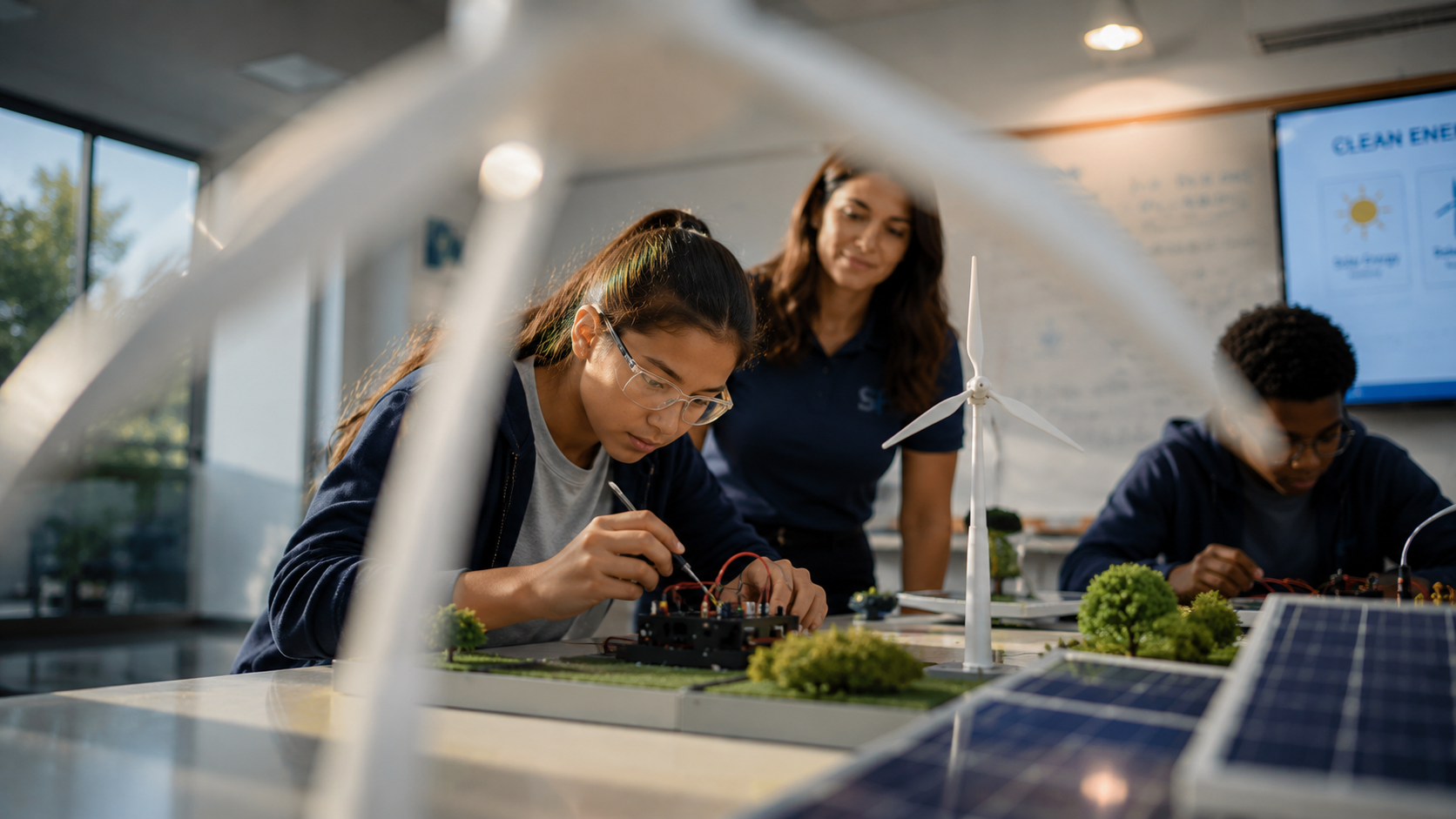
Inside a B-E Ready session where students build wind turbine models, explore renewable energy, and begin to see clean-energy careers as something they can actually imagine for themselves.
A student adjusts the blade on a small wind turbine model and watches it spin faster. Someone asks why. Another student wants to know how a real turbine works. Within minutes, what began as a classroom activity becomes a conversation about engineering, electricity, problem-solving—and the people who design, build, maintain, and manage the systems powering a changing energy economy.
That moment of curiosity matters.
For schools trying to make STEM learning more relevant, employers planning for the talent they will need in the years ahead, and workforce partners building stronger career pathways, clean-energy education offers something especially valuable: the chance to connect what students are learning today with careers they may pursue tomorrow.
That is the idea behind SmarterHelp’s B-E Ready programming. Designed for middle and high school learners, B-E Ready combines clean-energy education with interactive lessons, hands-on projects, real-world problem-solving, and career awareness. SmarterHelp’s curriculum introduces students to renewable-energy technologies, sustainability, environmental impact, and career pathways across clean energy, environmental science, sustainable construction, green transportation, and related fields.
And increasingly, this kind of exposure is not simply enrichment. It is early workforce development.
The Clean-Energy Workforce Starts Long Before the First Job Application
When workforce development conversations focus only on adults who are ready to apply for jobs, we may already be arriving too late.
Career pathways begin much earlier—with awareness.
A young person cannot prepare for a career they have never heard of. They cannot choose a technical program they do not know exists. They are unlikely to connect algebra, physics, construction, engineering, environmental science, communications, business, or technology to the energy sector unless someone helps make those connections visible.
This matters because clean energy is not one occupation.
The U.S. Department of Energy describes wind-energy careers as spanning technicians, engineers, and scientists, as well as educators, transportation professionals, trade workers, sales teams, and many other roles. DOE's wind workforce resources specifically emphasize introducing students to those pathways and creating stronger connections between educational institutions, training opportunities, and employers.
THE OPPORTUNITY
Solar presents a similarly broad landscape. DOE's current Solar Career Map points to 40 occupations across four industry sectors and more than 60 routes for advancement, reinforcing that clean-energy careers are not confined to a single technical track.
For a seventh grader, that may translate into a much simpler realization:
There might be a place for me in this.
And that realization is where workforce pipelines begin.
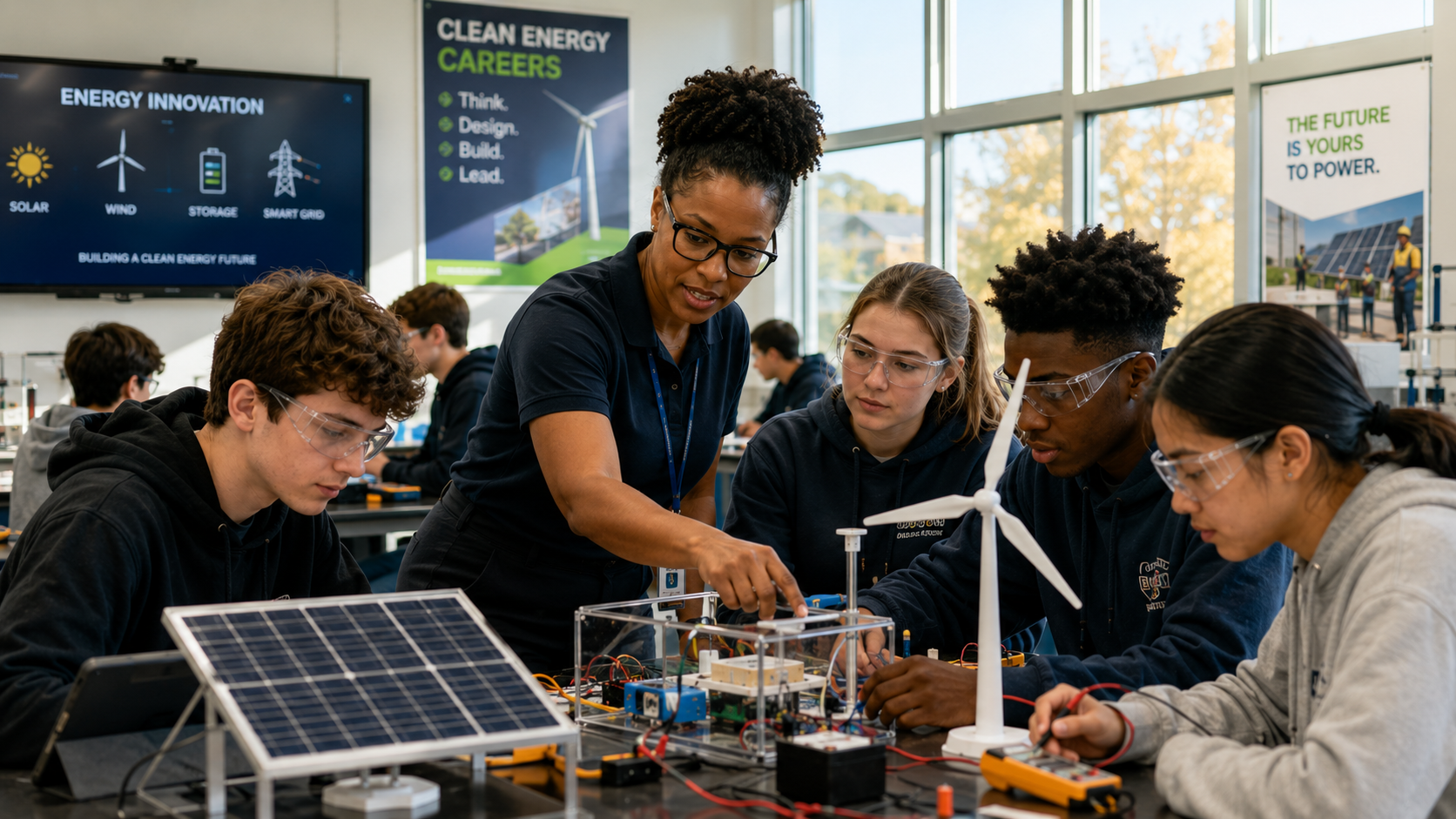
Bring Clean-Energy Careers Into Your Learning Community
SmarterHelp works with schools, employers, and workforce partners to build practical, industry-connected learning experiences across the clean-energy ecosystem.
Through B-E Ready, SmarterHelp provides clean-energy career-awareness programming, middle- and high-school curriculum, activation days, and teacher professional development. Organizations looking to build broader learning systems can also tap Energy Compass for custom curriculum development and Energy Bridge for employer-engagement and workforce pathway support.
Whether you're introducing students to renewable energy for the first time, building a clean-energy CTE pathway, strengthening teacher capacity, or connecting education more directly to employer demand, the goal is the same:
Ready to bring clean-energy learning and career exploration to your students, educators, or workforce community?
Connect with SmarterHelp to explore a B-E Ready activation, customized curriculum, or workforce-development partnership.
Sources:
https://www.energy.gov/cmei/systems/windexchange/education-training-and-workforce-development
https://www.energy.gov/cmei/systems/solar-energy-resources-job-seekers
https://www.energy.gov/policy/2026-us-energy-employment-report-useer
