Case Study
The Changing Dynamics of EV Charging Stations
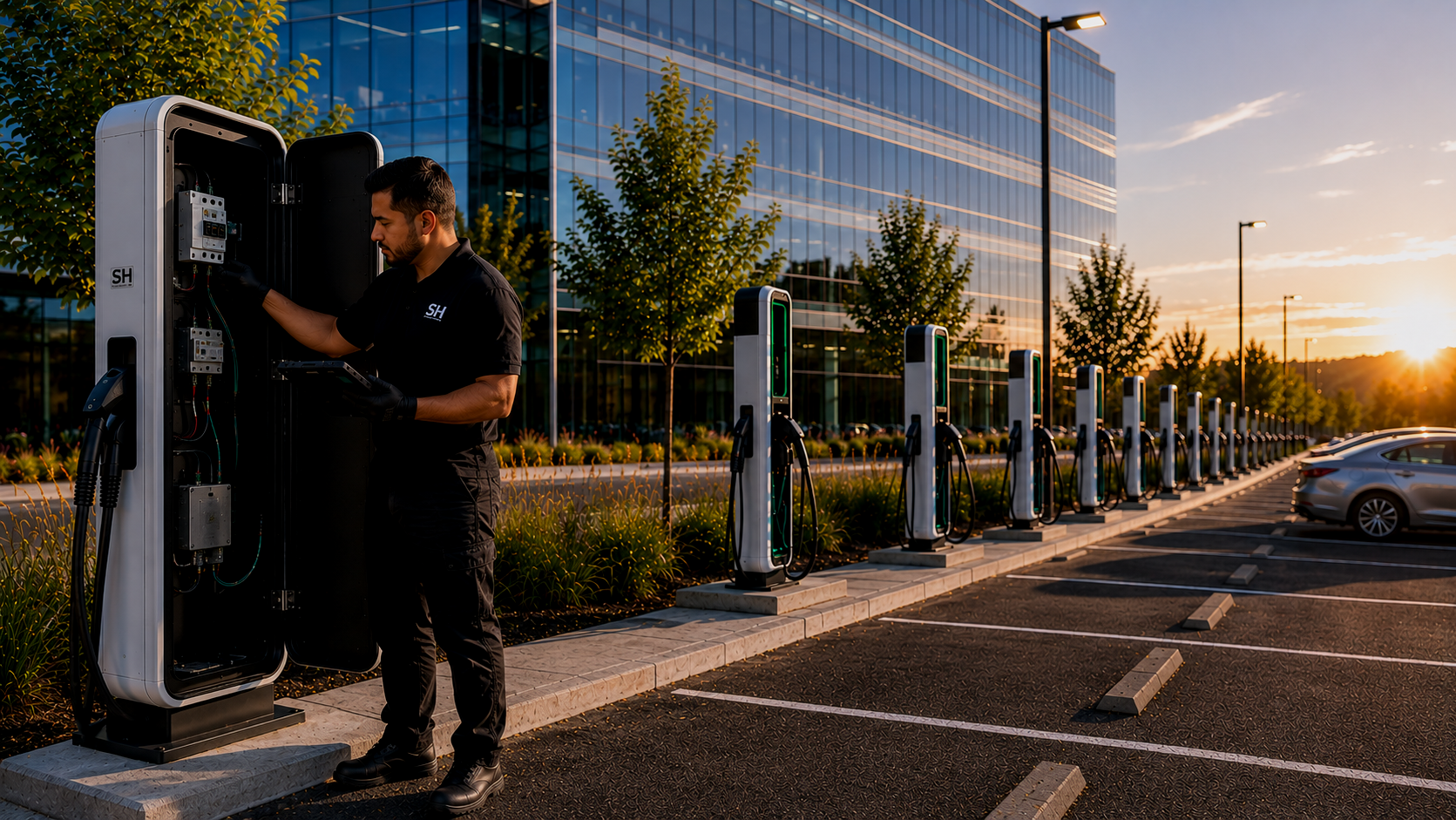
A charging station, also known as a charge point, chargepoint, or electric vehicle supply equipment (EVSE), is a power supply device that supplies electrical power for recharging the onboard battery packs of plug-in electric vehicles (including battery electric vehicles, electric trucks, electric buses, neighborhood electric vehicles, and plug-in hybrid electric vehicles).
Charging stations can theoretically be installed anywhere accessible by the electrical grid, including dedicated public charging facilities, multistorey car parks, private garages and carports, and even roadside parallel parking spots.
EV charging stations fall into two main types: alternating current (AC) chargers and direct current (DC) chargers. Electric vehicle batteries can only be charged with direct current electricity, while most grid electricity is delivered as alternating current. For this reason, most electric vehicles have a built-in AC-to-DC converter commonly known as the "onboard charger" (OBC). At an AC charging station, the grid supplies AC power to the onboard charger, which converts it to DC to recharge the battery. DC chargers provide higher-power charging (which requires much larger AC-to-DC converters) by integrating the converter into the charging station, avoiding the size, weight, and cost constraints of vehicle-mounted converters. The station then directly supplies DC power to the vehicle, bypassing the onboard converter. Most modern electric vehicles can accept both AC and DC power.
Public charging stations are typically found street-side or at retail shopping centers, government facilities, and other parking areas. Private charging stations are usually found at residences, workplaces, and hotels. Public charging accounted for about 46% of global EV charging infrastructure revenue in 2025, driven by major capital investment in DC fast-charging networks, grid upgrades, and highway corridor expansion projects.[1]
A 2024 review of public charging identified reliability, payment, ease of use and charger accessibility as dimensions of the customer experience. It found associations between charging experience and electric-vehicle purchase or repurchase intentions, but the reviewed literature provided no causal evidence linking the two.[2]